
History of Nkonteh
Medieval Period (circa 1500)
Being part of the great Akoose ethnic group, which itself is part of the large Bantu ethnic group, the Nkonteh community has a rich history that inter-twine with those of its parent ethnicity. The community started as a small settlement inhabited by one Pa EYA, who migrated to the region around the 1500 CE. Some sources claim his arrival predate 1500 CE, while others claim it was around the 1500 CE, since it was during the period of the Bantu migration and Bantu expansion. However, the exact period of this migration is not known, but his presence in Nkonteh can be traced back as far as the 1600 CE.
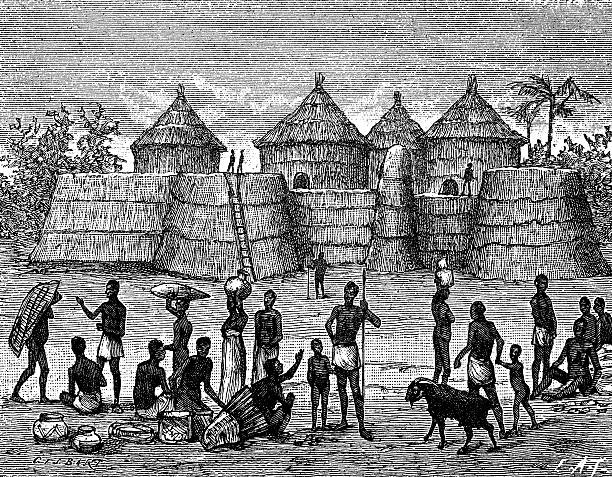
During this time, he gave birth to many sons and daughters who expanded their families at the foot of the Nkonteh mountain to create the first Nkonteh community. Due to the great generosity and hospitality of his community, the community was named Nkonteh, which means “a resting place for everyone”. Another interpretation of the name is consider to be “Nkong a teh”, which literarily mean “a city in the vallay”. It was a popular community where all neighboring communities seek refuge and safety in time of troubles, and it was vibrant with entertainment, handicraft, communal love, and equity. Popular handicrafts during this period include basket and locally made hunting guns. This was common because Pa Eya was a popular warrior, hunter, and farmer. His skills gave Nkonteh the safety and vibrancy it had at that time.
The pictures below is an illustration of community life and activities during that period.

Colonial Period (1800-1960)
Like many African communities, the Nkonteh community was also stroke by the colonial crises, which lead to the fleeing of the population to caves and hinterlands from, first the slave traders in the early 1800 CE, and later the colonizers in the mid 1900 CE. Many communities where abandoned or alienated due to such crises and Nkonteh community was not an exception.
However, due to its geographical location, it was a refuge to many people who were fleeing their communities. It was during this period that many foreign people inhabited the land, some of whom had more information and relationships with external communities where they had once lived. Due to the need of such external connections, one Pa MBELLE, who came during this time and was versed with the socio-political atmosphere at that time, was selected under the community leadership of Pa NDINDE, as a mediator between the NKONTE community and the external communities, including the then German colonial masters. Devising such a strategy at that time was rare but very effective in community security. This was not strange at that time because Pa NDINDE was generally known to be very wise in many aspects, especially local governance. He envisioned a NKONTE and Akoose land that will be technologically and infrastructurally developed like the white man’s land.
Pa MBELLE was tasked with the communication and representation of the community about external activities such as trade, tax, and new governance policies enacted by the colonial masters and the Bakossi paramount chief at that time. Together with other mediators, the community was prevented from direct colonization and influence by external forces, and so it continue to strives in such tumultuous period.
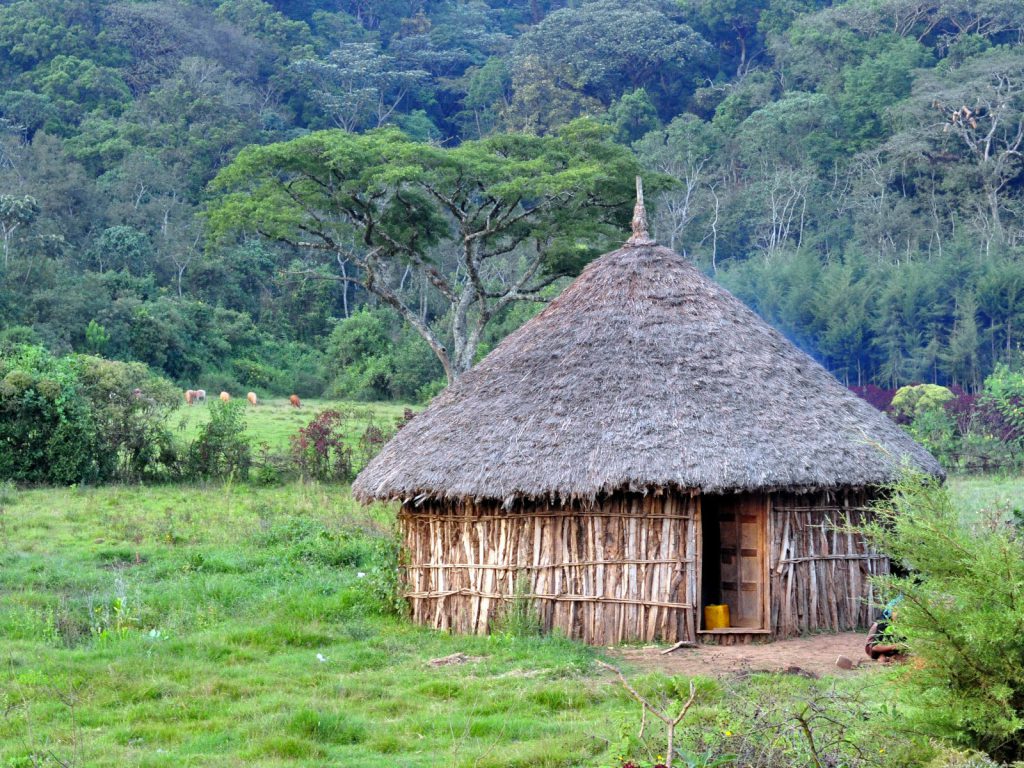
The type of houses during this period and those that were abandoned are illustrated in the pictures below.


Post-Colonial Period (1960-2000)
Just before the end of the German colonial period, around 1900 CE, the community experienced the death of their leader, Pa NDINDE. Before he died, and while his children where still young, he handed the community activities to Pa MBELLE, who was still active and experienced in mediating between the community and the external world.
The community continue to strive, and activities went normally even with the coming of the British and French colonial masters, that created an ethnic separation of the Bakossi tribe into French and English parts, existing upto this day. During this ethnic seism, the NKONTE community found itself in the English part of the new colonial structure. Before the end of this colonial era, the NKONTE community again experienced the death of their active regent, Pa MBELLE. However, before he died, the children of Pa MBELLE have grown up and he handed back the community activity to one of his sons, Pa EKOLLE.
Amidst such sad times, the community continue to strive with communal love, handicraft, and hospitality. Pa EKOLLE was actually not different from Pa NGUPE as he was famous in trading with external communities, even beyond Cameroon, such as Nigeria and Congo, with goods such as lawns, jewelleries, metal objects, and gun powder. He was indeed an industrious and international leader, versed with external activities in trade, engineering, and geo-politics. The figures below illustrate the type of housing infrastructures in the NKONTE community and most of the Akoose communities during this period.
After the British (also called English or Southern) Cameroon gained its independence on 1st October 1961 from the British to join the French Cameroon, and during the reign of Ahmadou Ahidjo as president of the United Republic of Cameroon, the region inhabited by the English speaking Bakossi ethnic group was renamed Kupe-Muanenguba division, and was divided into three sub-divisions; Bangem, Tombel, and Nguti, which exist upto this day. NKONTE was attributed to the Bangem subdivision. This did not hinder their community development and expansion under the leadership of Pa EKOLLE.
However, just before the end of reign of Ahmadou Ahidjo, in the early months of 1983, Pa EKOLLE also passed away. Once again the community was stroke by the death of their leader. While his children were still young, he handed the community activities to Pa NGALLE, who was old enough and had much wisdom and external experienced than many others in the community at that time. However, coupled with the world economic crises in the 1980s and the start of the global warming and climate change crises, the Nkonteh community, just like many African communities start to tumble. Added to this was social conflicts, which arises due to hunger and poor economic situation of the community. As the saying goes, ‘a hungry man is an angry man’, so too the community experience anger amongst its inhabitants due to hunger, leading to the migration of many out of the community, leaving the community in a limbo.
At the end of the 1990s, coupled with the socio-economic crises, Pa NGALLE also passed away mysteriously without appointing any leader, allowing the EYA’s to search for themselves the leader of their community. This increases the rate of migration out of the community, leaving it to a near extinction. The community was almost deserted, if not of its original occupants, the EYA’s, who had no where to go apart from sustaining the life of their community, waiting for the day it will once again regain its vibrancy.
For more information about the history of Cameroon and the Bakossi people, visit these links; Cameroon history, Bakossi people

Modern Period (2000 to current)
After the death of Pa NGALLE, the community was in state of anarchism. The EYA’s continue to search for a leader of their community as no one was interested in leading such a community which was deserted by its members and is at the brink of extinction.
However, in the early years of 2000, around 2005, one vibrant person, Mr NGUPE Mathias who was the junior brother of Pa NGALLE, own up to lead the community inorder to complete his brother’s legacy for the Nkonteh people. Owing to his external experience with other local communities and personalities, the EYA’s found his candidature interesting, and even though most of the Elites in the EYA family where against his candidature due to his criminal records, he was selected by the local EYA elites to lead the community. This was because no EYA elite living out of the local community was ready to take the responsibility due to their professional pre-occupations.
However, it is only within a few years after the acceptance of his leadership proposal that his plans to lead the almost extinct community was discovered, which was to transform the community into a community forest in order to take over its resources for personal profit. This was later raise to the Bangem court by the EYA’s, where a he was sentenced and later died in 2018 of an undisclosed illness.
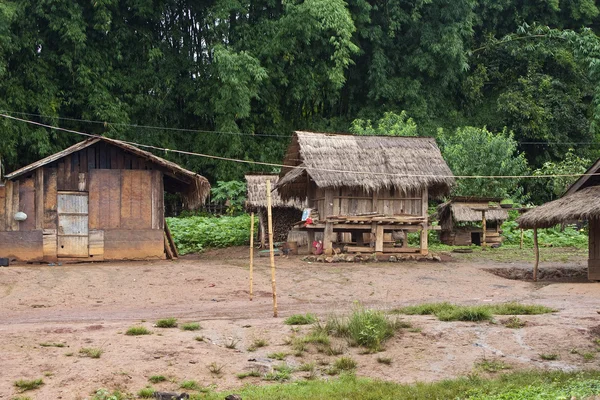
Since then, the community has been struggling to build itself while aiming for a better future. Futurnately, it was during thesame period of his court cases that NKOCDA was created, to gather the children of NKONTE at home and abroad for a collective and effective development of the NKNOTE community. Since then, the state of the community have changed and the pictures below illustrate the type of recent buildings and activities in the community. For more information on NKOCDA vision, projects, and events, visit these links; Our VPM-V, Projects, Events.

For more information about the History of Nkonteh, please CONTACT US.